

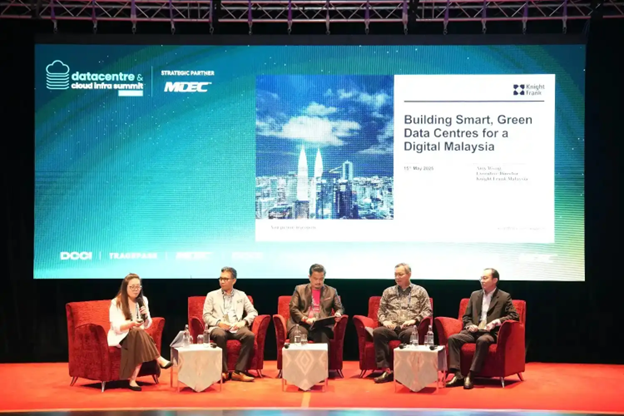
The digital economy of the world is growing at an alarming rate, and data centres have become the foundation of this revolution. Due to the growing demand for cloud services, artificial intelligence, and real-time data processing, the emphasis of infrastructure planning is no longer on capacity and speed. Rather, sustainability has become a mark of concern in expansion strategies, notably in the emergence of sustainable data centres in Malaysia. Businesses are being pressured to cut down on energy use, cut down on carbon emissions, and enhance efficiency in their operations, without jeopardizing performance. This is not merely based on environmental responsibility, but economic and regulatory factors are transforming the industry.
Companies that used to focus on scale are beginning to think again about how infrastructure can be both powerful and resource-efficient.
The Shift from Scale-Driven Growth to Responsible Infrastructure Planning
Historically, the growth of data centres was more oriented toward capacity expansion in order to address the growing digital demand. Nevertheless, this method tends to ignore the long-term environmental and operational expenses. The industry today is moving towards responsible infrastructure planning, where the prioritization is on efficiency and sustainability in addition to growth. Companies are embracing smarter design structures that minimize energy waste and streamline resource usage. This encompasses modular infrastructure models, workload balancing, and enhanced cooling systems that enhance the operational efficiency to a large extent.
The emphasis has changed from the construction of bigger facilities to the construction of smarter systems that can respond to demand on the fly. The increasing cost of electricity and the tightening of environmental laws also contribute to this change.
Energy Optimization as a Core Operational Priority
One of the most significant issues of data centre operations is energy consumption. As the world continues to increase in data traffic, organizations are investing more in energy optimization technologies to keep their organizations efficient and keep costs down. The current facilities are also implementing AI-based energy management systems that keep track of the power consumption and control it in real-time. With the aid of these systems, inefficiencies are determined, and the workloads are balanced to reduce the redundancy of energy.
State-of-the-art cooling systems like liquid cooling and free-air cooling are also being implemented in order to decrease the reliance on the traditional high-energy systems. Moreover, the integration of renewable energy is increasingly gaining popularity, and facilities will be capable of lowering their carbon footprint to a considerable extent.
Environmental Accountability and Regulatory Pressure
The issue of environmental responsibility is significantly influencing the strategies of expanding infrastructure. The world governments and other regulating bodies are putting in place more stringent carbon-cutting policies that are pushing organizations to go green. Sustainability standards are becoming a requirement to be met in order to be approved to operate and survive in the long run. The corporations are now expected to disclose their energy consumption, the level of emissions, and their sustainability programs as part of their corporate responsibility models. This is a trend of growing regulatory pressure that is pushing data centre operators to invest in more efficient infrastructure systems and cleaner technologies.
In addition to compliance, increasing public and investor pressure is on operations that are environmentally responsible. Companies that do not change may face a reputation loss and a lack of competitiveness.
Technological Innovation Driving Sustainable Infrastructure
Sustainable infrastructure development lies at the core of technological innovation. Data centre operations are being enhanced by integrating artificial intelligence, machine learning, and automation to enhance efficiency and minimize environmental impact. Predictive analytics enables operators to predict demand trends and allocate resources to a better extent, reducing energy wastage. Edge computing, too, is playing its part in terms of reduced latency and workloads distributed nearer to users, thus reducing the cost of transmission energy. Moreover, intelligent infrastructure systems are facilitating real-time tracking of environmental factors that can assist operators in sustaining the best performance levels. Not only are these innovations enhancing operational efficiency, but also contributing towards long-term sustainability objectives.
With technology constantly advancing, it is facilitating the creation of a new generation of high-performing and environmentally responsible data centres and is establishing new standards of development in the industry in the future.
Strategic Outlook for Sustainable Expansion in the Digital Era
Sustainability-based strategy is increasingly becoming the future of data centre expansion. Companies are becoming aware of the fact that they need to strike a balance between performance and environmental responsibility in order to grow in the long term. Energy efficiency indicators, carbon reduction targets, and infrastructure flexibility are now considered in investment decisions. Hybrid and cloud-native are gaining popularity, and businesses are able to maximize the utilization of resources and still be able to scale. The concept of sustainability is also influencing the cooperation of technology providers, policymakers, and industry leaders to work out a unified set of standards for greener operations.
With the ever-increasing digital demand, firms that are committed to sustainable growth will have a competitive edge in terms of their efficiency in operations and their position in the market.
Conclusion
Sustainability has ceased to be a supporting aspect in the digital infrastructure development; it is the force that influences development strategies across the industry. As organizations respond to rising energy requirements, regulatory forces, and technology, the focus has shifted to building efficient, resilient, and environmentally friendly systems. This change signifies an expanded conformance with operational consistency and world environmental ambitions. Organisations that integrate sustainability as an inherent business strategy are more likely to achieve economies of scale, legal compliance, and competitiveness. The development of the modern infrastructure shows that performance and responsibility may coexist and be guided by innovation and strategic planning.
With the industry still underdeveloping, datacenter events in Malaysia, like DCCI 2026 in Malaysia, are relevant in the exchange of knowledge and industry collaboration. DCCI 2026 in Malaysia is an important participant in the development of the discourse of sustainable digital infrastructure, which contributes to the creation of a more responsible and future-oriented digital ecosystem.

