

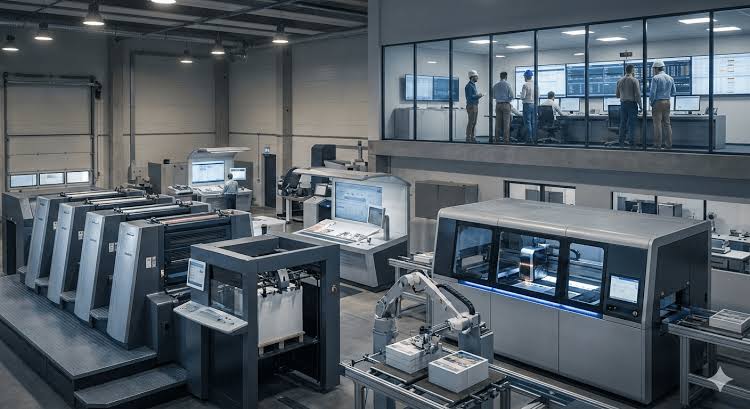
For decades, printing served one primary purpose: placing text, graphics, or identification marks on a surface. Whether on packaging, equipment, or consumer products, printed layers were expected to communicate information and maintain visual quality. Today, however, printing has evolved into something far more sophisticated. Modern printed surfaces actively contribute to how products function, making them an integral part of industrial engineering rather than a finishing process.
This transformation has been driven by rapid advances in material science and manufacturing technology. The development of carbon conductive ink has enabled printed layers to carry electrical signals, support sensors, and perform specialized industrial functions while maintaining excellent print quality. As a result, printing has become an essential manufacturing technology that extends well beyond aesthetics.
Functional Printing Changes Product Design
The way engineers approach product development has changed significantly. Instead of adding labels or markings after production, manufacturers now design printed layers that contribute directly to product performance.
A printed surface can become part of an electronic circuit, provide antistatic protection, improve product traceability, or support communication between smart devices. This integration reduces the need for additional components while simplifying manufacturing processes.
As products become smaller and more intelligent, every layer performs multiple functions. Printing has therefore become an active contributor to engineering rather than simply a visual finishing step.
Precision Begins At The Material Level
Every high-performance printed surface begins with carefully engineered materials. Manufacturers devote considerable attention to selecting particles, binders, additives, and processing methods that produce stable, reliable formulations.
The size and distribution of microscopic particles influence conductivity, adhesion, drying behavior, durability, and overall print consistency. Even slight variations during formulation can affect long-term performance.
Because of this, material engineering has become one of the most important stages in developing advanced industrial printing solutions.
Printed Layers Supporting Electronics
Electronics manufacturing has become one of the largest beneficiaries of functional printing technologies. Traditional electronic assemblies often require multiple production steps involving separate conductive components.
Printed conductive materials simplify this process by allowing electrical pathways to be deposited directly onto substrates. This approach reduces manufacturing complexity while supporting compact product designs.
Printed electronics are now widely used in touch controls, flexible displays, membrane switches, smart labels, sensors, wearable devices, and numerous industrial monitoring systems.
Surface Performance Beyond Appearance
Industrial environments expose products to demanding conditions every day. Heat, moisture, ultraviolet radiation, chemicals, abrasion, and continuous handling can quickly degrade ordinary printed surfaces.
Modern industrial formulations are designed to withstand these conditions without losing functionality. Strong adhesion, environmental stability, and resistance to wear ensure that printed layers continue performing throughout the product’s operational life.
Instead of serving only decorative purposes, these engineered surfaces actively contribute to equipment reliability and long-term product quality.
Carbon Materials Enable New Capabilities
Carbon-based materials have opened entirely new possibilities for functional printing. Their unique combination of conductivity, durability, chemical stability, and processing flexibility makes them valuable across numerous industrial applications.
Innovations involving platinum carbon black ink demonstrate how advanced carbon formulations can support specialized printing applications requiring reliable electrical performance and long-term stability. These materials allow engineers to create printed surfaces capable of performing tasks that would previously have required separate mechanical or electronic components.
As research continues, carbon-based printing technologies are expected to support even broader industrial applications across manufacturing, healthcare, transportation, and energy systems.
Manufacturing Accuracy Through Process Control
Creating a functional printed surface requires much more than selecting the right formulation. Every stage of production must be carefully controlled to ensure that the printed layer performs consistently across thousands or even millions of products.
Factors such as coating thickness, curing temperature, printing speed, drying conditions, and substrate compatibility all influence the final result. A slight variation in any of these parameters can affect conductivity, adhesion, or long-term durability.
Modern manufacturing facilities therefore use automated inspection systems, precision monitoring equipment, and digital quality control to maintain consistent production standards. This combination of material science and process engineering allows functional printing to meet the strict reliability requirements of industrial applications.
Smart Packaging Gains New Functions
Packaging is no longer designed only to protect products during transportation. It has become an important platform for communication, authentication, and product interaction.
Printed functional layers now support technologies such as RFID labels, QR-enabled tracking systems, freshness indicators, anti-counterfeit features, and interactive consumer experiences. These innovations improve supply chain visibility while providing manufacturers and consumers with greater confidence in product authenticity.
As packaging continues evolving into an intelligent information system, functional printing will remain at the center of this transformation.
Collaboration Drives Material Innovation
The advancement of functional printing depends on close collaboration between material scientists, equipment manufacturers, printing specialists, and product designers.
Each group contributes unique expertise that helps improve formulation performance, production efficiency, and application reliability. Continuous research enables new combinations of materials capable of supporting increasingly sophisticated industrial requirements.
The growing role of black ink manufacturers within this innovation ecosystem reflects the industry’s commitment to developing printing solutions that meet evolving technical demands across diverse industrial sectors.
Future Factories Need Intelligent Surfaces
The next generation of manufacturing will depend heavily on connected systems, automation, and real-time monitoring. Intelligent factories require products that communicate, detect changes, and support digital production environments.
Functional printed surfaces are expected to play an increasingly important role in this evolution. Printed sensors, conductive pathways, identification systems, and monitoring technologies will become standard features across many industrial products.
As manufacturing embraces digital transformation, printing will continue evolving from a finishing process into a critical engineering technology that supports smarter, safer, and more efficient industrial operations.
Conclusion
Printed surfaces have evolved far beyond their traditional role of displaying information or improving appearance. Today, they contribute directly to electrical performance, product reliability, manufacturing efficiency, and intelligent system integration across numerous industries. By combining advanced materials with precision manufacturing, functional printing has become an essential part of modern industrial engineering rather than simply a finishing process. The continued advancement of platinum carbon black ink is further supporting these innovations by enabling high-performance printing solutions for increasingly sophisticated industrial applications.
As industries continue to explore smarter manufacturing technologies and multifunctional materials, organizations such as Birla Carbon remain associated with advancing carbon-based material solutions that help support the future of functional printing and high-performance industrial applications.